
Artemis: Scheduling is Easy, Execution is Not
Can NASA meet Jared Isaacman's ambitious schedule to return astronauts to the Moon?


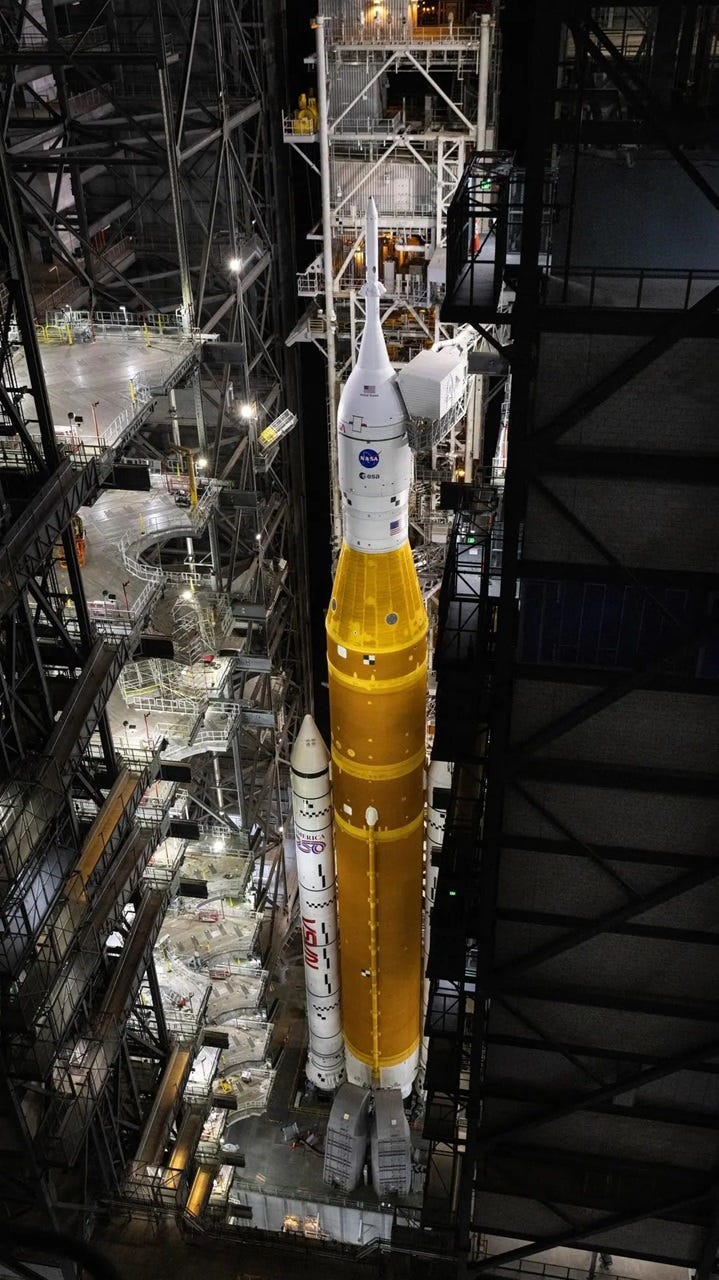
We’ve seen the first big moves by new NASA Administrator Jared Isaacman. In order to land Americans on the Moon in 2028, the space agency will:
work with SpaceX and Blue Origin on ways to accelerate development of their lunar landers,
add an Artemis Earth orbit mission in 2027 during which a crewed Orion spacecraft will dock with one or both landers, and
land astronauts on the Moon not once but twice in 2028,
end work on upgraded versions of the Space Launch System (SLS) and the second mobile launcher, and
cancel the yet to fly SLS Exploration Upper Stage in favor of the operational Centaur 5 stage.
Isaacman has injected a sense of urgency into a program that has long lacked it. He wants boots on the Moon before the end of President Donald Trump’s second (and legally mandated, final) term in January 2029. The administration wants Americans to land there before the Chinese do. The question, of course, is whether NASA can do it.
Another Year, Another Plan
“Conquest is easy, control is not,” Capt. James T. Kirk told goateed Mirror Universe Spock. In this case, scheduling is easy, execution is not. NASA and its contractors have blown through numerous schedules over the years. There have been plans and re-plans, and re-plans of the re-plans. And still everything has continued to move to the right.
When it comes to execution, NASA and its contractors have been wandering around in the desert for more than a decade, periodically launching missions that demonstrated progress without developing any real momentum. Results thus far include:
Exploration Flight Test-1, Dec. 5, 2014: Uncrewed Orion capsule launched on a Delta IV Heavy rocket — 4.5 hours
Artemis I, Nov. 16, 2022 - Dec. 11, 2022: Uncrewed Orion mission around the moon, first launch of SLS — 25 days, 10 hours, 53 minutes
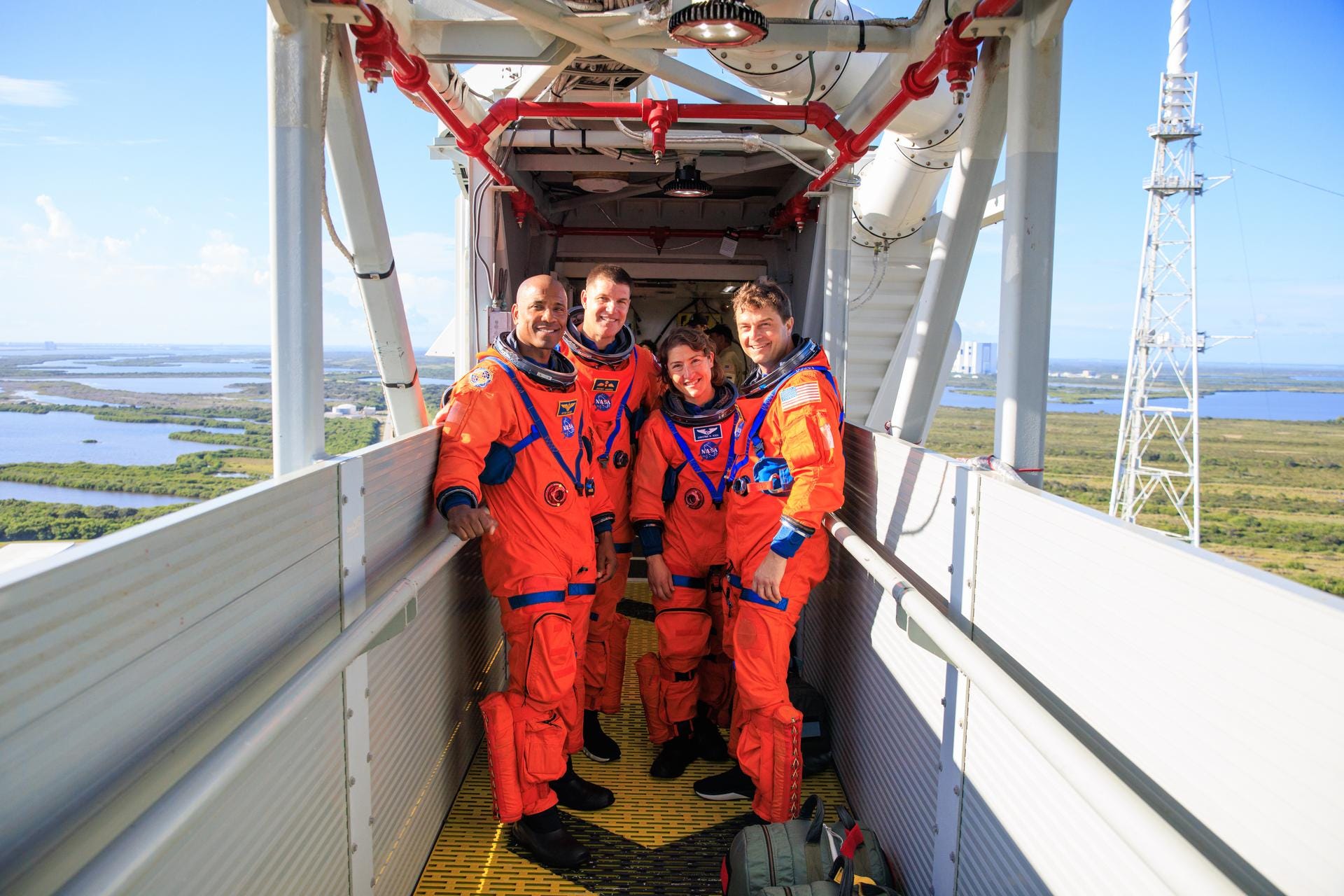
So, NASA has managed two uncrewed flights in the past 11+ years. To meet the new schedule, the space agency and its contractors will need to conduct four missions — including a pair of crewed lunar landings — in the next 33+ months. These missions include:
Artemis II, April 1, 2026: first crewed Orion flight test around the Moon.
Artemis III, 2027: crewed Earth orbital mission during which Orion will dock with one or both lunar landers being developed by SpaceX and Blue Origin.
Artemis IV, 2028: first crewed landing.
Artemis V, 2028: second crewed landing.
That’s a tall order. NASA and its partners will need to significantly speed up the Artemis program while trying not to get anyone killed. NASA lost 17 astronauts in three separate accidents when it prioritized schedule over safety.
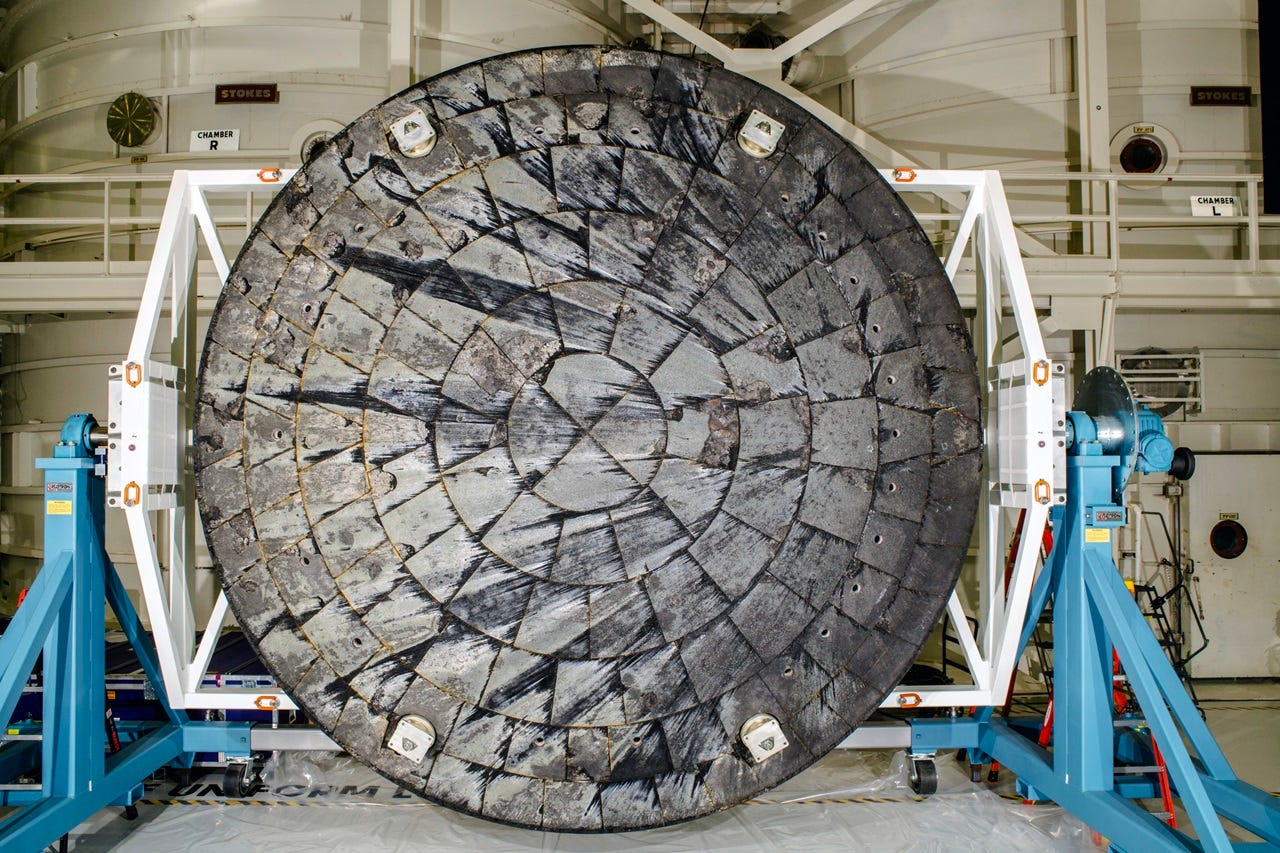
Speaking of safety, the Orion heat shield remains the topic of vigorous debate as NASA is within three weeks of launching the Artemis II crew to the Moon. The heat shield suffered significant damage during reentry on the Artemis I flight. NASA said it has completed an investigation into the problem, and the vehicle is safe for the astronauts to fly. Other outside experts claim the spacecraft is too dangerous to fly with people on board.
It seems rather incredible that this is still an issue given all the billions of dollars spent on the Artemis program. Heat shields are not a exactly new technology; they have been around for more than 60 years. But, here we are.
A Different Approach
Back in the 1960s, NASA and its contractors developed the Saturn V rocket, Apollo spacecraft, and the lunar module as part of one integrated program. Everything launched on a single rocket. Every element of the system was expendable.
The Artemis program is being done differently. Multiple launches will be required for each mission. Spacecraft will top off their tanks at fuel depots in Earth orbit. Rockets, spacecraft and landers are designed to be fully or partially reusable. This is a system, not a series of individual one shot missions.
Another key difference is that crucial elements of the mission architecture were designed in large part to meet other goals.
The SLS rocket that launches the Orion spacecraft to lunar orbit was designed by politicians. SLS leveraged space shuttle hardware in order to keep the large workforce that built the shuttle’s external tank, main engines, and solid rocket boosters (SRBs) employed. And employ them it has, at great cost in both time and money.
The tradeoff is that SLS has a limited payload capacity. Upgraded versions of the rocket would be able to launch heavily loads. They would also have cost NASA billions of dollars and many years to develop. Isaacman felt that money could be better spent elsewhere in the Artemis program.
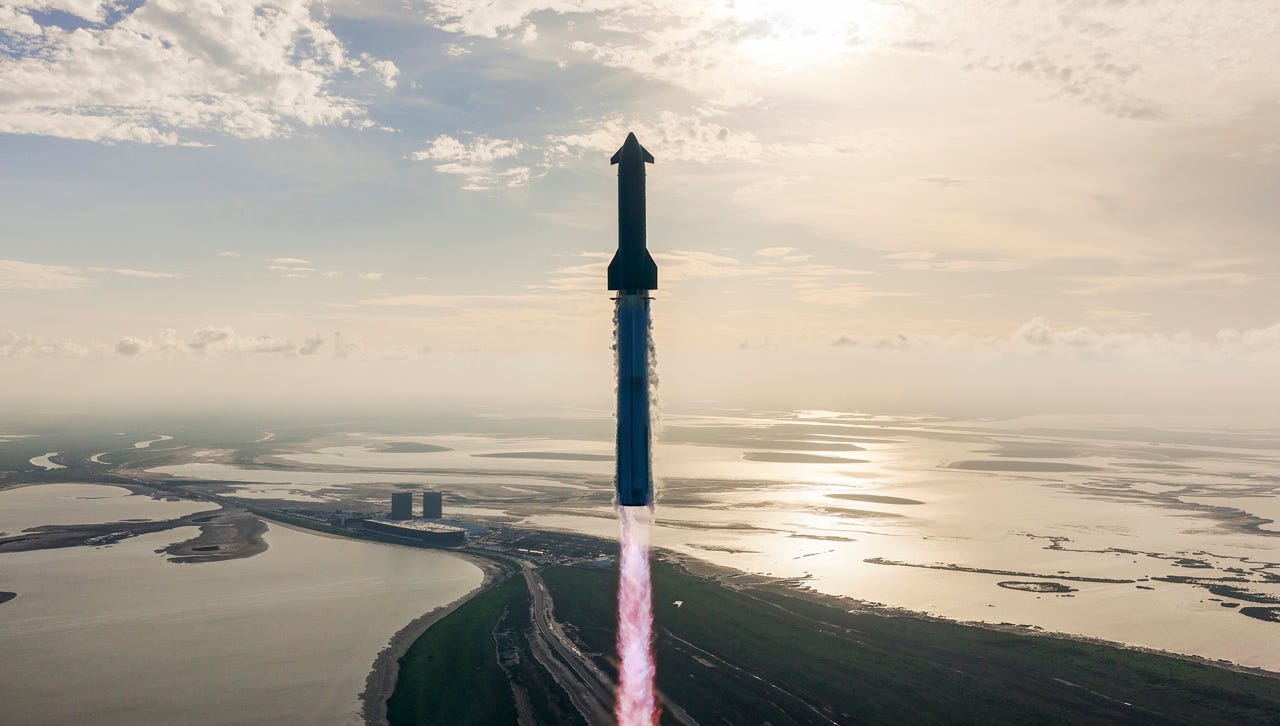
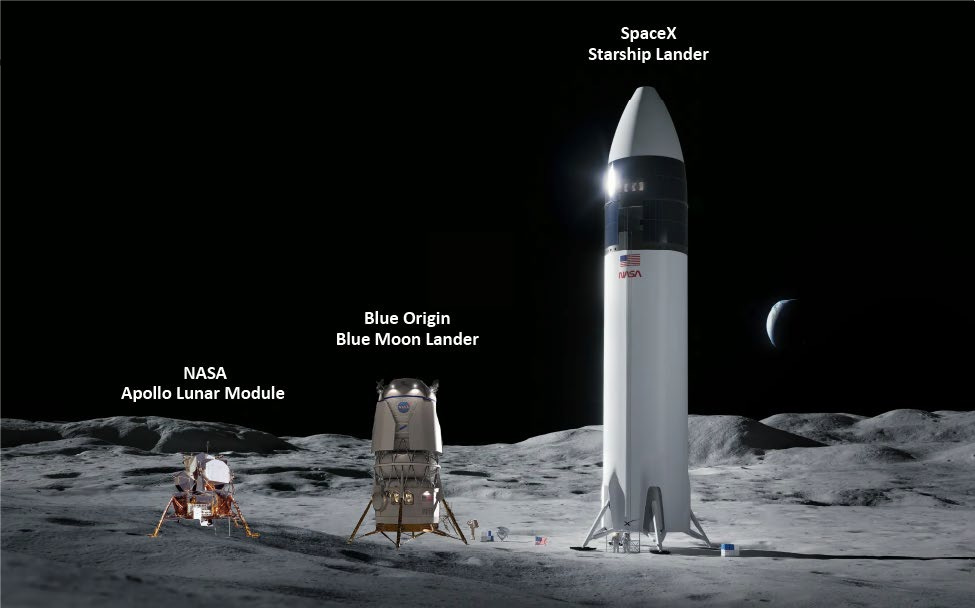
SpaceX’s Human Landing System (HLS) is derived from Starship, which Elon Musk and his engineers designed to take colonists to Mars. SpaceX didn’t submit plans for a lunar lander that could be launched by Starship and its Super Heavy first stage booster. Instead, the entire Starship-derived upper stage will touch down on the lunar surface. Standing 171 feet tall, HLS will be the largest vehicle ever to land on another world. Astronauts will ride an elevator to reach the surface.
HLS will be able to carry large payloads to the Moon. That will be of great help in supporting surface operations and establishing a permanent Moon base. The tradeoffs are a long development cycle and a complex mission architecture. To make the mission architecture work, Starship and Super Heavy need to be fully reusable. That process is taking much longer than planned.
“Since award of the Appendix H, Option A contract in July 2021, SpaceX’s development of the Artemis III Starship has been delayed at least 2 years, with additional delays expected,” according to a NASA Office of Inspector General (OIG) audit released on March 10.
There have been 11 Starship flight tests over the past three years. Super Heavy stages have been caught by mechanical arms on its launch tower at Starbase. However, Starship has yet to make a full orbit of Earth. A 12th suborbital flight test is scheduled for April, with an orbital flight expected later this year.
Complex Mission Architectures
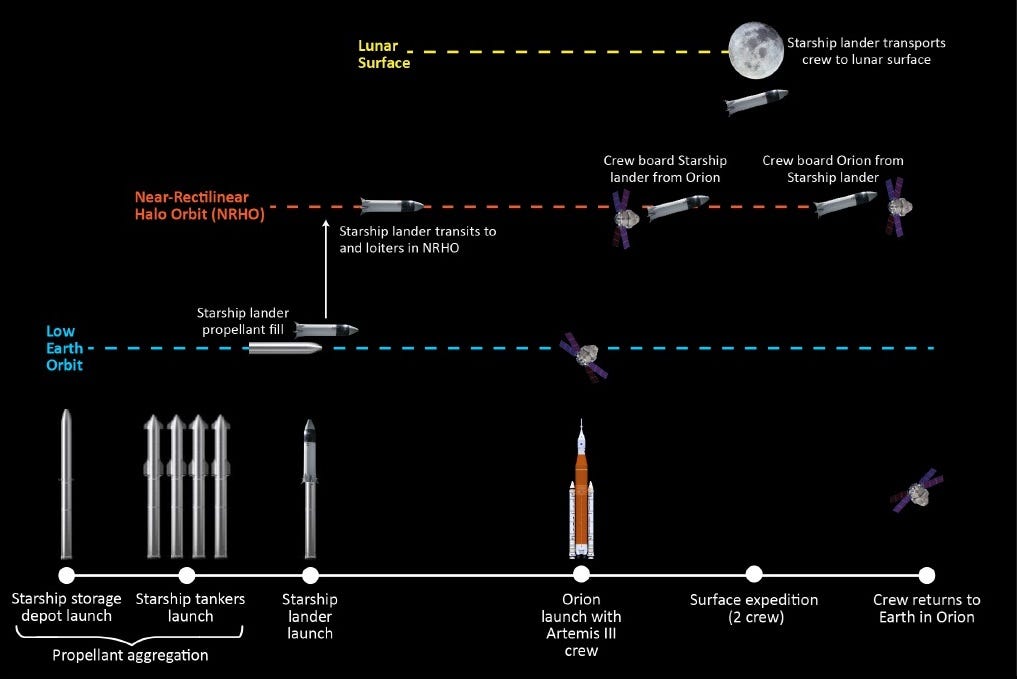
The OIG audit said that a crewed flight to the lunar surface using SpaceX’s HLS and SLS/Orion will require 13 separate launches over a 200-day period.
Orion-HLS Mission Architecture
Launch a Starship-derived storage depot into low Earth orbit (LEO)
Launch 10 Starship tankers to fill the storage depot with propellants
Launch an uncrewed HLS that will refuel at the depot before flying to a near rectilinear halo orbit (NRHO) of the Moon
Launch SLS with a crewed Orion spacecraft to dock with SpaceX’s lander
Transport astronauts to the surface and back aboard the HLS
HLS docks with Orion, which returns astronauts to Earth.
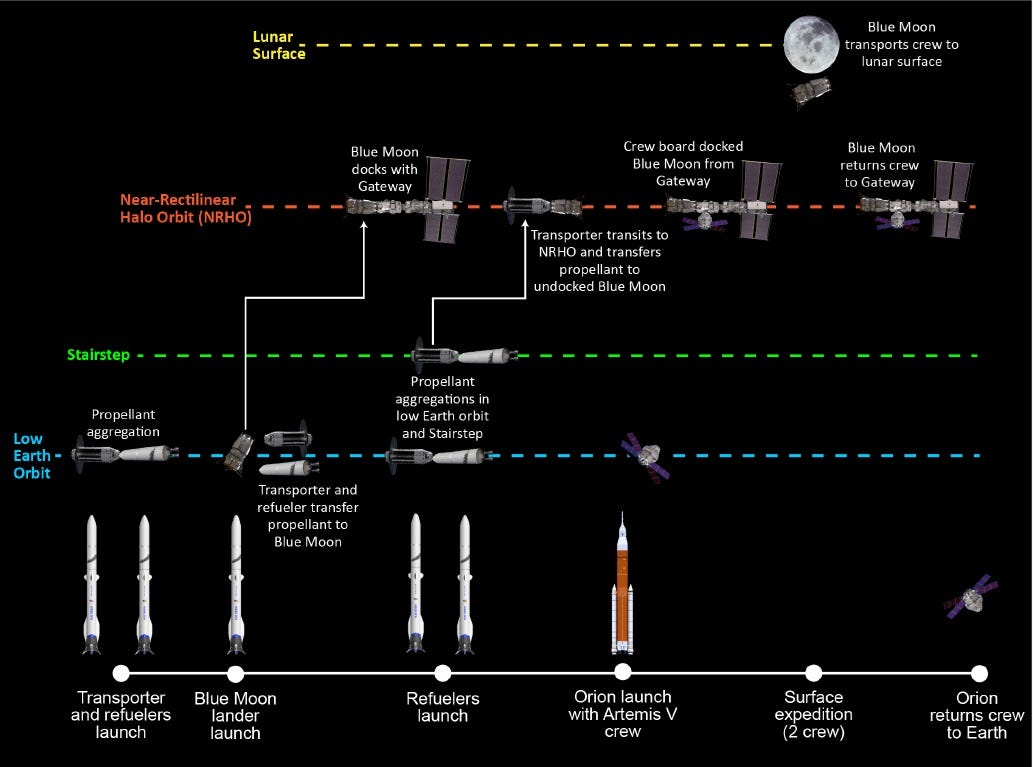
Blue Origin doesn’t need to develop a brand new launch vehicle. The company will use its New Glenn rocket. Blue Moon’s mission architecture is even more complicated than SpaceX’s plan.
Orion-Blue Moon Mission Architecture
Launch a transporter to LEO that will serve as a propellant depot
Launch a fleet of refuelers to fill the transporter
Launch an uncrewed Blue Moon lander to LEO
Top off Blue Moon’s tanks using the transporter and a refueler
Send Blue Moon to NRHO were it will dock with the Gateway station
Refuel the transporter in LEO with additional refuellers
Fly the refueler to a higher “stairship” orbit where it receives its final fuel load
fly the transporter to NRHO
Undock Blue Moon from the Gateway and refuel it with the transporter
Redock Blue Moon with the Gateway
Launch an SLS rocket with a crewed Orion spacecraft to the Gateway
Fly astronauts to and from the lunar surface aboard Blue Moon
Return astronauts to Earth aboard the Orion spacecraft.
Blue Origin’s mission architecture is dependent upon the Gateway, which could be the next item on Isaacman’s chopping block. Critics claim the Gateway is a costly program that isn’t needed for the exploration of the Moon. They say hardware being developed for it in the U.S. and overseas could be repurposed for other uses.
Like SpaceX, Blue Origin is also experiencing delays with its lander. The OIG audit said Blue Moon is running at least eight months behind schedule, with another 11 month long slip expected.
The number of steps needed to land astronauts on the surface introduces challenges in terms of cost and schedule. It will be interesting to see if SpaceX and Blue Origin will attempt to reduce the steps in their responses to NASA’s request that they accelerate the development of their landers.
SLS use will continue, due to sunk costs and a political need for 2028 landings. A rushed pace will also continue because 'beating the Chinese' is an artificial, 'urgent' goal.
We could phase out SLS after a couple of crewed landings in 2030, with two test-proven human landing systems in place, an infrastructure designed for long-term bases on the Moon, and a stepping-stone set of technologies that would get us to Mars.
That's not what we're doing right now.